
A gentler way to address pain
We want to explore approaches in which VR can become part of more careful work with pain, body perception, and everyday physical discomfort.
NEEDED NOW
Recovery does not begin after war ends. It begins when a person is living with pain, reduced mobility, the effects of amputation, anxiety, disrupted sleep, and the feeling that life has been broken apart.
We want to develop a VR support direction for people affected by war as part of a broader path of recovery. Not as a flashy technology for attention, but as a careful tool that may help a person move through part of that journey with more control, stability, and hope.
This direction is currently in development. But the need itself is already here. That is exactly why it should be addressed now.
WHY IT MATTERS
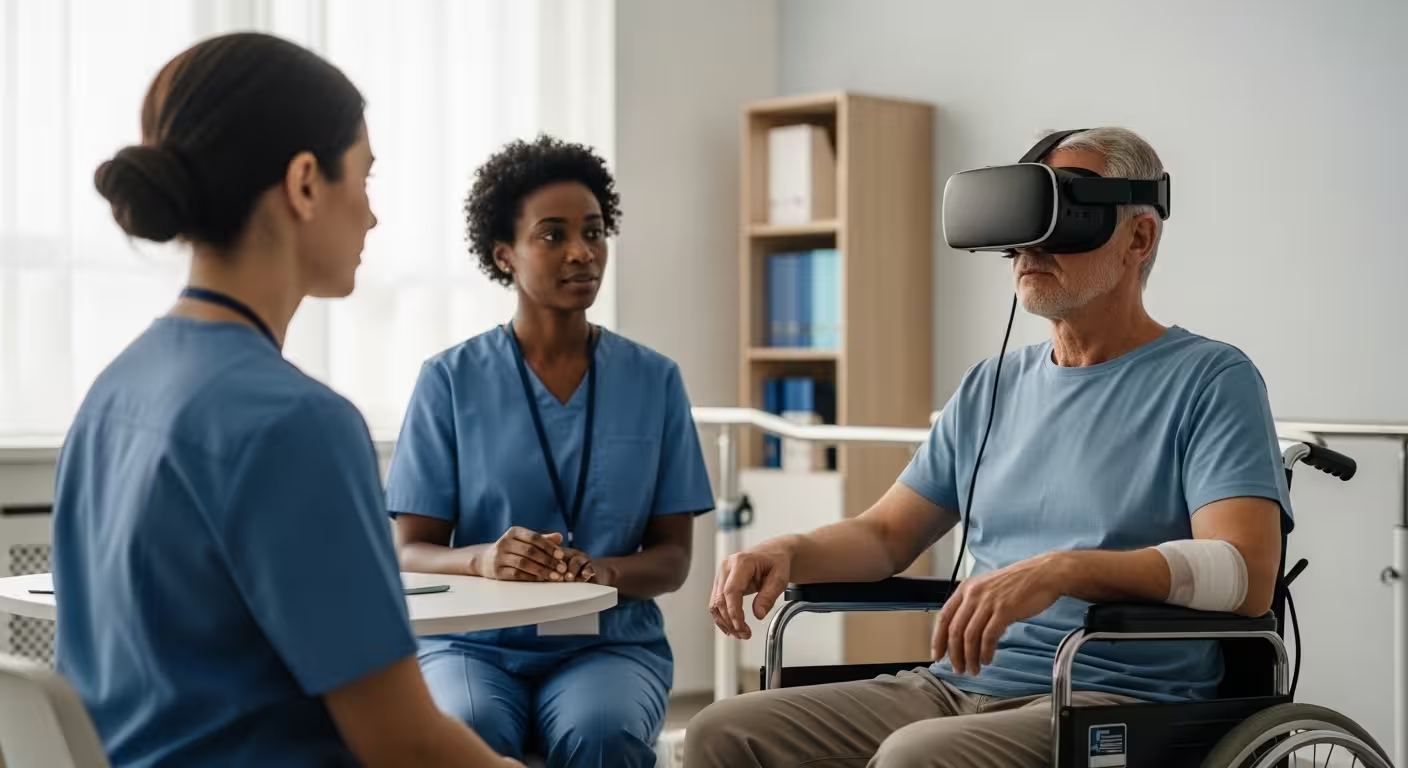
After a severe injury, a person needs more than surgery, more than medication, and more than time. They need an environment where they can relearn movement, cope with pain, face fear, return to daily life, and gradually rebuild a sense of connection to their own future.
For people affected by war, that path is often long and uneven. For some, it runs through physical pain. For others, through phantom sensations after amputation. For others, through constant tension, emotional exhaustion, and the loss of any stable ground.
That is why recovery should not be treated as an abstract issue for “later.” It has to be part of support now.
WHAT WE WANT TO BUILD
We want to develop a direction where VR is used not as a promise of miracles, but as part of thoughtful and modern support. What matters to us is not the spectacle of technology, but its ability to create a more structured, supportive, and manageable space for recovery.
We see this as a field where human support, professional expertise, and technological tools can come together in a way that respects the reality of rehabilitation and psychological recovery.
Our goal is not to sell the idea of VR. Our goal is to build a format that respects the person, avoids exaggerated promises, and responds to real needs.
WHAT STAYS CENTRAL
We want to explore approaches in which VR can become part of more careful work with pain, body perception, and everyday physical discomfort.
We care about approaches where a person is not lost inside another system, but gradually regains a sense of safety, participation, and inner stability.
We see recovery as more than one symptom. What matters is resilience, daily functioning, and the ability to return to life step by step.
HOW WE SEE IT
This kind of direction cannot be built around hardware alone. It should grow with people who understand trauma, rehabilitation, and the real limits of the method.
We do not want to use the language of dramatic results. In a field like this, honesty matters more than impressive claims or marketing effects.
A person affected by war is not a case study and not a display for innovation. Any program should begin with dignity, safety, and real human value.
WHY VR
VR is not a fantasy from the future. Today, immersive VR is already being studied and used in different areas of health support, including pain-related care, rehabilitation exercises, coping skills, and some forms of mental health support.
That does not mean the technology fits everyone or solves everything on its own. But it does mean the field already has a real research and practice foundation that can be approached responsibly and without exaggeration.
That is the kind of approach we want: not to promise too much, but to build carefully, step by step, and with respect for evidence and human reality.
SUPPORT IT NOW
Support is needed not only when something is fully built, but when the right parts are just beginning to come together into a meaningful system.
By supporting Helping War Victims, a person helps the fund develop future recovery directions with long-term purpose, human value, and a responsible approach. For people who care about trust and clarity, the next steps should be easy to find through transparency, ethics, and contact pages.
COMMON QUESTIONS
Not yet. We are presenting a direction that the fund wants to develop responsibly and step by step, not a launched service with a promised result.
Because the need for recovery does not begin after war ends. It begins when a person is already living with pain, trauma, limits, and fear about what comes next.
Because it is no longer an abstract idea. There is already research and real-world practice showing that immersive environments can be used as part of work related to pain, rehabilitation, and psychological support.
It is meant for people affected by war, including people living with severe injuries, amputations, long-term pain, and the psychological impact of traumatic experience.
No. We do not want to promise anything that cannot be stated honestly. In this field, precision, safety, and real value matter more than strong claims.
By supporting Helping War Victims, people help the fund develop future recovery directions with care, transparency, and long-term purpose rather than short-term claims.
NEXT STEP
We want to help not only through short-term response, but also through the longer work of rebuilding life. That is why we care about directions where technology can serve the person in a calm, responsible, and meaningful way.
If that approach speaks to you, you can support this work now.